Home
Home Articles
 Twos Talks
 Videos
Before Bauhaus, Vienna Had Its Crazy Design Rebels
Wiener Werkstätte, Vienna, 1903. A group of avant-garde designers set out to rethink everyday life. Their ideas became part of a broader modernist design story that would include Bauhaus and Art Deco.
Bauhaus is seen as the moment modern design began. The school is known for bringing art and design into a new relationship with modern life. But 16 years before Bauhaus opened in Weimar, Vienna had already produced a radical experiment of its own.
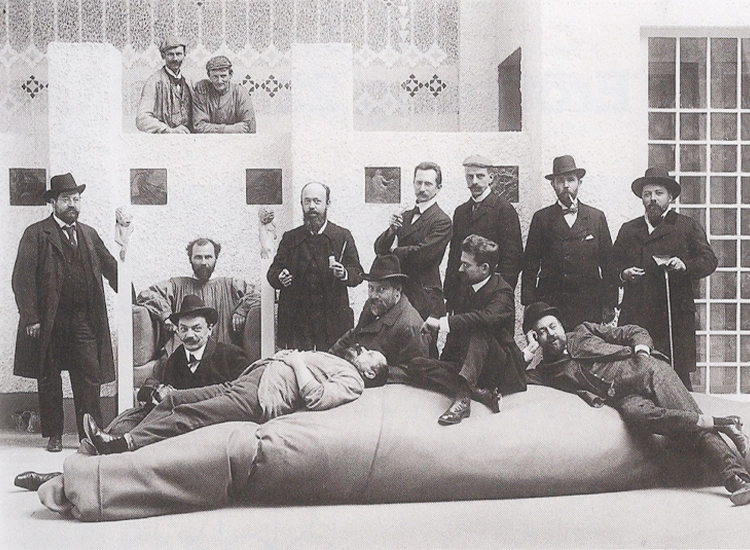
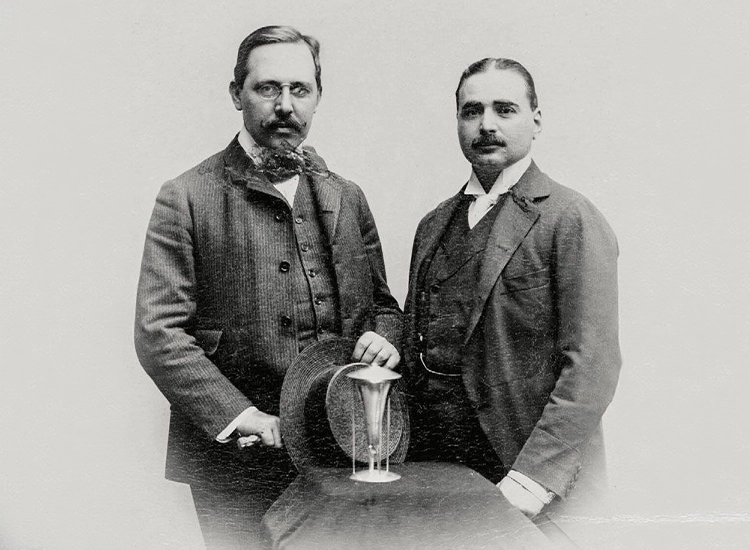
The Wiener Werkstätte was founded in 1903 by Josef Hoffmann, Koloman Moser and Fritz Waerndorfer. The idea was simple but ambitious: everyday life deserved better design. A chair could belong to the same visual world as a room, a textile or a coffee cup. The Werkstätte grew out of Vienna’s avant-garde culture and the influence of the Arts and Crafts movement, with a vision that treated everyday objects as carefully as works of art. Its work ranged across early 20th-century design, and women played a major role in that story.
A Workshop for a New Way of Living
At the turn of the 20th century, Vienna was full of arguments about what modern life should look like. Artists who had broken away from the conservative Viennese art establishment formed the Vienna Secession in 1897, pushing against the historic styles that still dominated European art and architecture. The British Arts and Crafts movement had also reached Vienna, with a different idea about the role of design. Good design could improve the way people lived.
Josef Hoffmann and Koloman Moser were right in the middle of this ferment. By 1903, they had joined forces with the patron Fritz Waerndorfer to establish the Wiener Werkstätte. The model had strong roots in the British Arts and Crafts tradition, especially the Guild of Handicraft founded by Charles Robert Ashbee. The ambition was to bring artists and skilled craftspeople into the same creative enterprise and raise the standard of the things people used every day.
There was a bigger idea behind the project. Vienna’s avant-garde had been drawn to Gesamtkunstwerk, the “total work of art”, described a vision in which different forms of art could belong to one coherent whole. The Wiener Werkstätte took that principle into domestic life. A room could have its own visual identity, and every object inside it could follow the same logic.
That changed the scale of the designer’s job. The work could extend from the architecture down to a chair, from a textile to a coffee cup. Design could accompany ordinary life at every level.
For the Wiener Werkstätte, this was part of a larger ambition to give modern life its own visual identity.
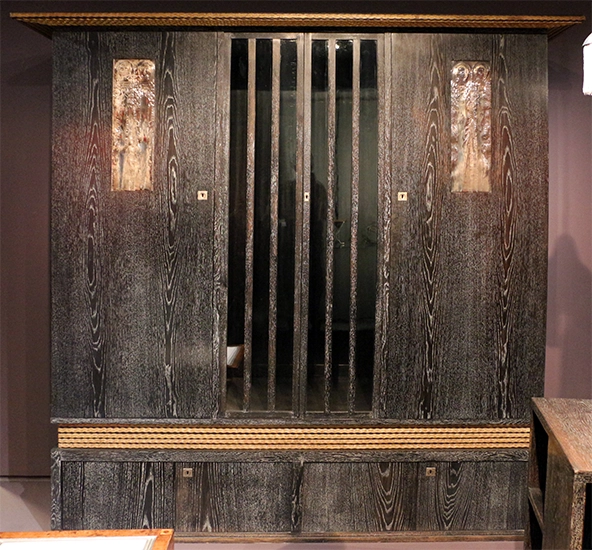
Photo: Sailko, CC BY 3.0.
What If Everything Around You Was Designed?
The idea reached almost everything around a person. A coffee cup could receive the same attention as a piece of furniture. A textile could follow the same visual language as the room where it was used. The Werkstätte’s output eventually stretched across ceramics, metalwork, furniture, textiles, fashion, graphic design and household objects.
That approach also changed the relationship between designer and craftsperson. The Werkstätte brought design and skilled making into the same process, with artists working alongside specialist craftspeople to produce objects as complete visual works. The aim was consistency, down to the smallest details. A sugar bowl, a vase or a writing cabinet could carry the same formal ideas found in a much larger interior.
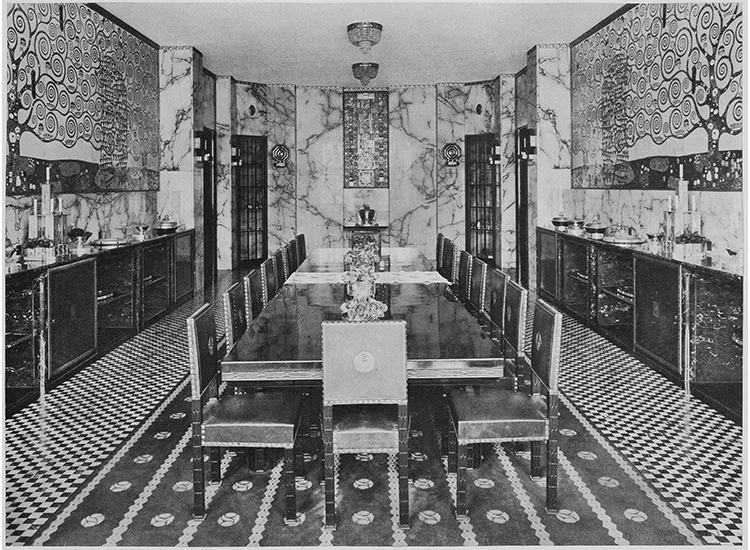
The most ambitious expression of this idea took shape in Brussels. In 1905, the Belgian banker and collector Adolphe Stoclet commissioned Josef Hoffmann to design a private residence. Construction continued until 1911, with Wiener Werkstätte artists contributing to the interiors and decoration. Koloman Moser worked on the project, and Gustav Klimt designed the celebrated mosaic frieze for the dining room.
Palais Stoclet brought the Werkstätte’s vision to an extraordinary scale. Hoffmann’s architecture, the furniture, the decorative scheme and the functional objects were conceived as one coherent environment. Even the garden followed the same visual logic. UNESCO considers the house one of the most complete expressions of the Wiener Werkstätte’s Gesamtkunstwerk and credits it with influencing the development of modernist architecture and Art Deco.
The Werkstätte had started with an idea that sounded almost obsessive in 1903. What if design could follow you everywhere?
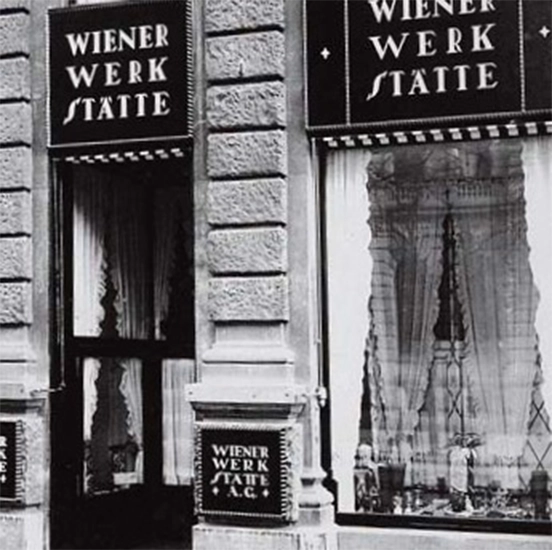
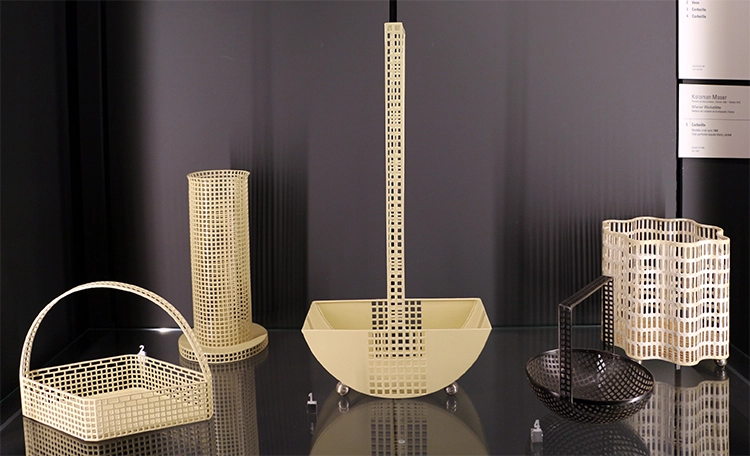
Photo: Sailko, CC BY 3.0.
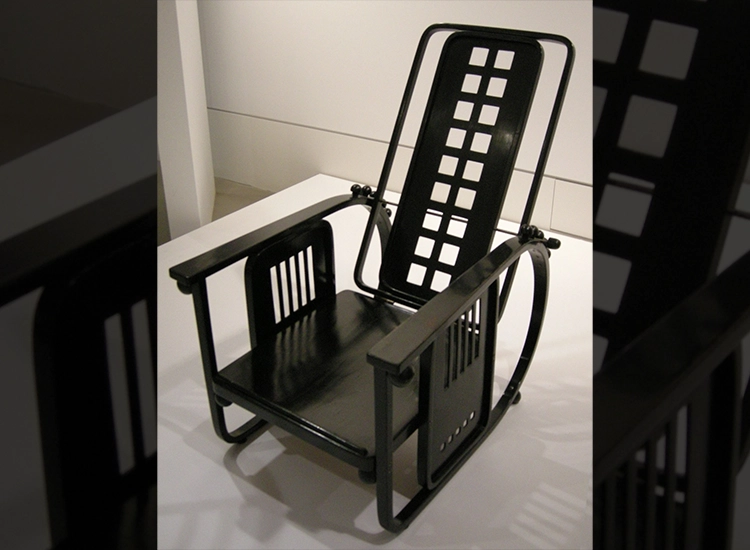
Photo: Sailko, CC BY-SA 3.0.
The Fight Against Mass-Produced Mediocrity
By 1905, the Wiener Werkstätte had a clearer enemy in sight. Much of European design was still drawing on historic styles, and industrial production had filled the market with cheap goods that Hoffmann and Moser considered poorly made and visually uninspired. In the Werkstätte prospectus, they called for a new standard based on useful objects, good proportions and careful treatment of materials.
The Werkstätte wanted carefully made design for everyday use, with artists and skilled makers working closely together. That standard came at a price. The enterprise built a clientele among affluent Viennese customers, and Hoffmann acknowledged that it could never reach the whole market.
The result was a contradiction at the heart of the project. The Werkstätte wanted better design for everyday life, but the cost of that work kept much of the vision out of reach for most people.
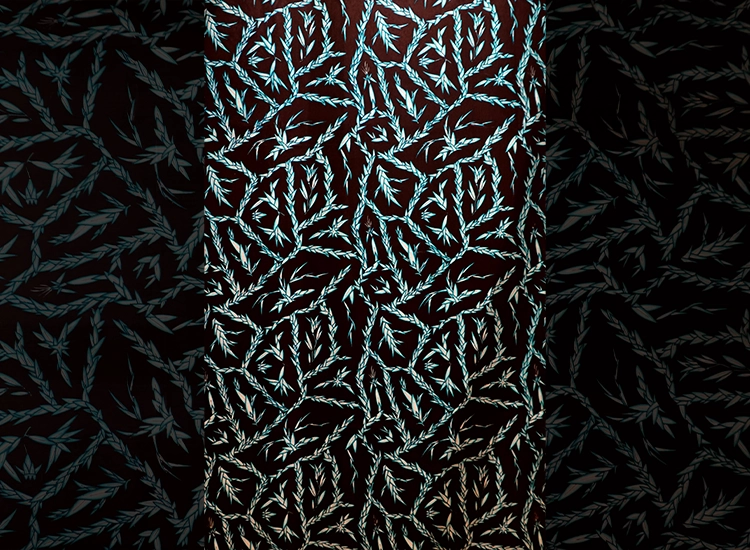
Photo: Geolina163, CC BY-SA 4.0.
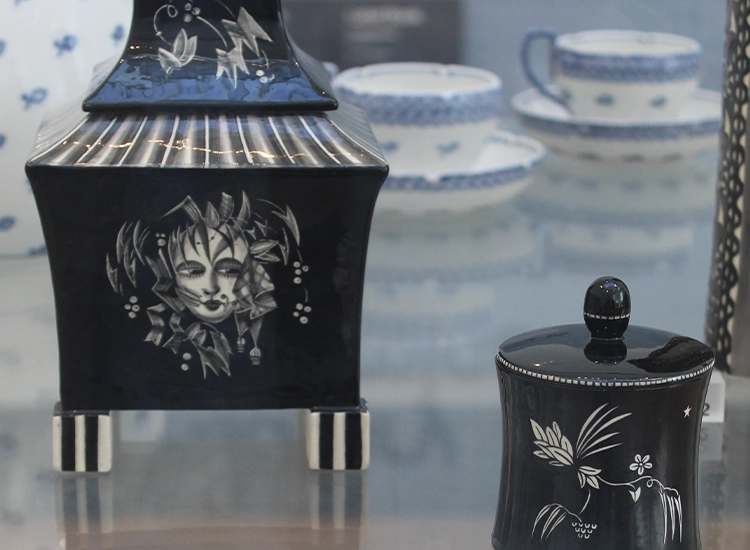
CC0.
The Strange Side of Wiener Werkstätte
The early Wiener Werkstätte had a strong taste for geometry. Josef Hoffmann and Koloman Moser favored clean forms and disciplined compositions. The Werkstätte’s first designs had a precise, architectural character.
The mood grew stranger during the years of World War I. Dagobert Peche joined the Wiener Werkstätte in 1915. His work made the decorative side of the Werkstätte more experimental. His designs drew on nature, Baroque and Rococo ornament, folk art and the idea of metamorphosis. A jewelry box could sprout a fantastical handle. A textile could make a repeating pattern feel almost dreamlike.
Peche also had an unusually strong theory behind the work. In his 1922 collection of writings, The Burning Bush, Peche argued for the “overcoming of utility” as a path towards new artistic expression. The idea challenged the assumption that a designed object had to explain itself through function. Form, ornament and fantasy could have a life of their own.
Josef Hoffmann admired him deeply. After Peche died in 1923, Hoffmann called him the greatest ornamental genius Austria had produced since the Baroque. By the early 1920s, Peche’s work stood at the center of the Wiener Werkstätte’s more exuberant decorative language. Some of that exuberance would soon find a place in Art Deco.
And Then There Were the Women
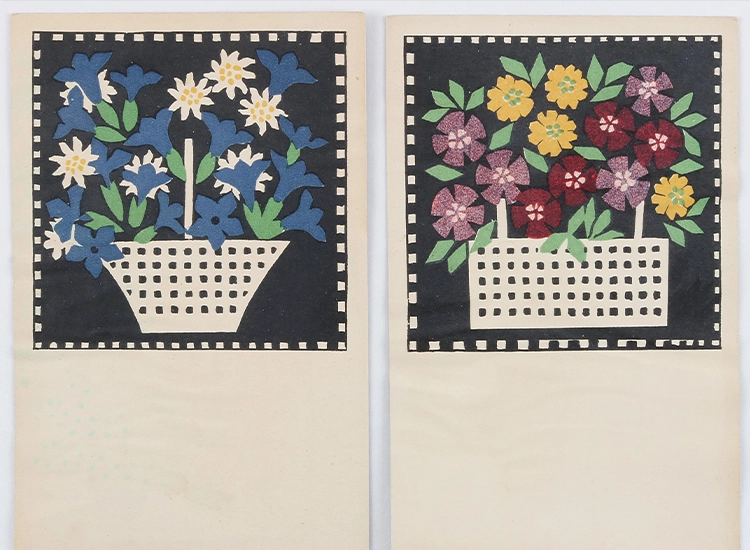
The names most closely associated with the Wiener Werkstätte are still Hoffmann, Moser and Peche. The archive tells a much larger story. Research at the MAK has identified around 180 women who worked for the Werkstätte between its founding in 1903 and its liquidation in 1932. During the interwar years, women played a central role in the look of the company, especially across textiles, fashion, graphic design and ceramics.
Many of these artists studied at Vienna’s School of Arts and Crafts, where Hoffmann and Moser taught. In 1916, the Wiener Werkstätte also established an Artists’ Workshop. The First World War reduced the number of men working in the field, so women made up most of the artists in the new studio during its early years. The workshop gave them room to experiment, and ceramics became an especially important field for women artists.
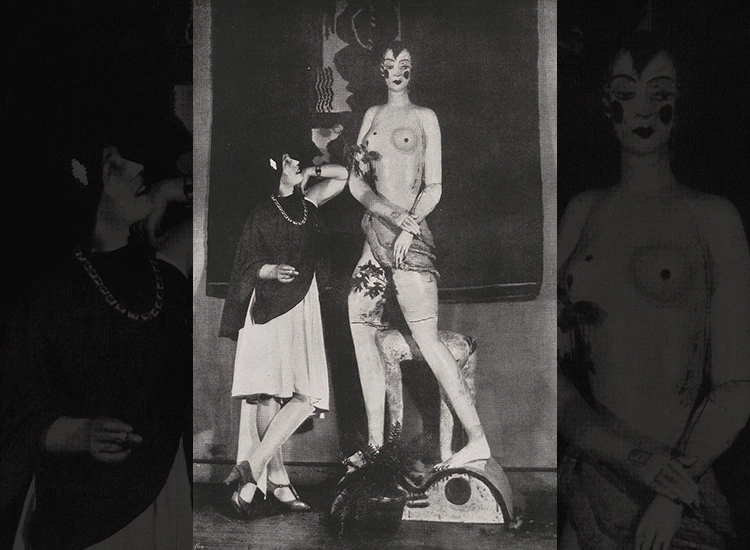
Vally Wieselthier came through this world. She studied with Josef Hoffmann and Michael Powolny at the School of Arts and Crafts before joining the Wiener Werkstätte in 1917. Ceramics became her main field, and by 1927 she was heading the Werkstätte’s ceramics production. Her figures and vessels brought a strikingly expressive quality to Wiener Werkstätte ceramics. A comprehensive MAK exhibition on Wieselthier, running from April 29, 2026 to January 10, 2027, is now tracing her career in Europe and the United States, with works from European collections and her American family archive.
Wieselthier’s career makes the larger story easier to see. By the interwar years, women were central to the visual identity of the Wiener Werkstätte, and artists such as Wieselthier pushed its ceramics toward a more individual and expressive language.
The familiar history of the Wiener Werkstätte starts with Hoffmann, Moser and Peche. The archive tells a wider story. Women were central to what the Werkstätte designed and to the changing character of its work.
Short Answers (FAQ)
What was the Wiener Werkstätte?
The Wiener Werkstätte was a Vienna-based cooperative of artists, designers and craftspeople founded in 1903 by Josef Hoffmann, Koloman Moser and Fritz Waerndorfer. It aimed to bring high-quality design into everyday life, producing everything from furniture and textiles to ceramics, fashion and household objects.
Was the Wiener Werkstätte before Bauhaus?
Yes. The Wiener Werkstätte was founded in Vienna in 1903, 16 years before Bauhaus was established in Weimar in 1919. Both belonged to the wider development of modern design, although their approaches to craft, education and production differed.
What role did women play in the Wiener Werkstätte?
Women played a major role in the Wiener Werkstätte. Research by the MAK has identified around 180 women artists who worked with the organization between 1903 and 1932, including Vally Wieselthier, Felice Rix, Mathilde Flögl and Maria Likarz.