Home
Home Articles
 Twos Talks
 Videos
CIA Used Modern Art as a Cold War Weapon
The CIA quietly backed the institutions that promoted Abstract Expressionism abroad and used American artistic freedom as a weapon in the cultural war against Soviet communism.
In the early years of the Cold War, American painters were making some of the strangest art the country had ever produced. Jackson Pollock splashed paint across enormous canvases. Mark Rothko filled them with vast fields of color. To critics of Soviet culture, this kind of art offered an image of freedom. To the CIA, it offered something else too: a way to make American freedom visible.
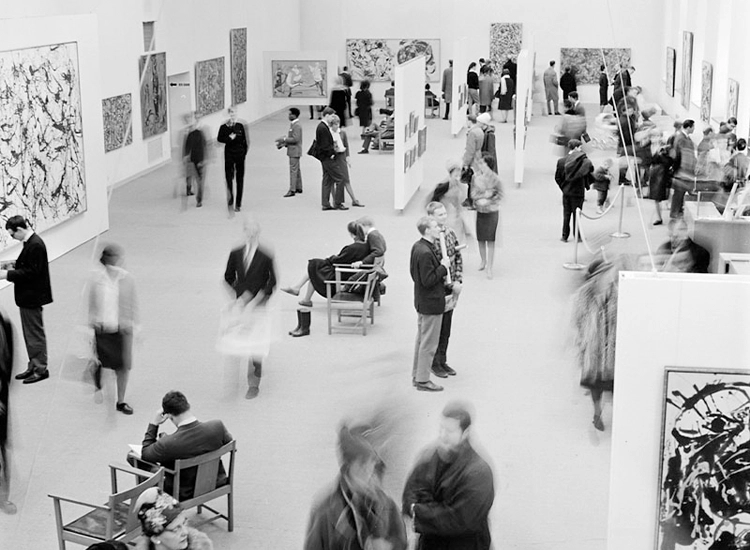
Photo: Lindgren, Herbert (1919–1987), Stockholms stadsmuseum / Wikimedia Commons
The Cold War’s Cultural Arena
In 1995, The Independent published a startling report claiming that the CIA had secretly promoted American Abstract Expressionism during the Cold War. At first glance, it sounded almost too strange to be true. Why would a spy agency care about paintings by Jackson Pollock, Mark Rothko, Willem de Kooning, or Robert Motherwell?
The story, however, was based on interviews with former CIA officials, archival research, and a trail of organizations and foundations whose covert connections to the agency were later exposed. The CIA’s involvement in cultural organizations such as the Congress for Cultural Freedom became public in 1967. The research pointed to a much broader campaign that sought to shape Western intellectual and cultural opinion.
Abstract Expressionism was useful precisely because it appeared to resist political messaging altogether. Its focus on individual expression and artistic freedom offered a powerful contrast to the Soviet Union’s officially sanctioned Socialist Realism.
In the cultural competition of the Cold War, a chaotic Pollock canvas could be presented as evidence of a society where an artist was free to make something unpredictable or difficult to interpret.
That made art part of a geopolitical argument.
Building a Cultural Network
The CIA worked through a network of cultural organizations, foundations, and intermediaries that could operate at some distance from the agency itself. American cultural projects received covert support under the appearance of independent sponsorship.
One of the most important organizations in this network was the Congress for Cultural Freedom, founded in West Berlin in 1950. It brought together cultural figures and intellectuals who opposed Communist totalitarianism and operated across more than 30 countries at its height. The organization supported conferences and publications across Europe. The CIA secretly financed the organization through intermediary channels. The agency’s financial role became public in 1967.
The same model extended across the cultural Cold War. CIA money flowed through private foundations and other organizations that appeared to operate independently of the agency.
British journalist and historian Frances Stonor Saunders later called this approach the “long leash.” The idea was simple: cultural figures were more useful as symbols of freedom if they did not appear to be speaking for the American government.
The strategy extended far beyond painting. The Congress for Cultural Freedom supported magazines such as Encounter. Other CIA-linked foundations financed cultural projects across Europe and beyond.
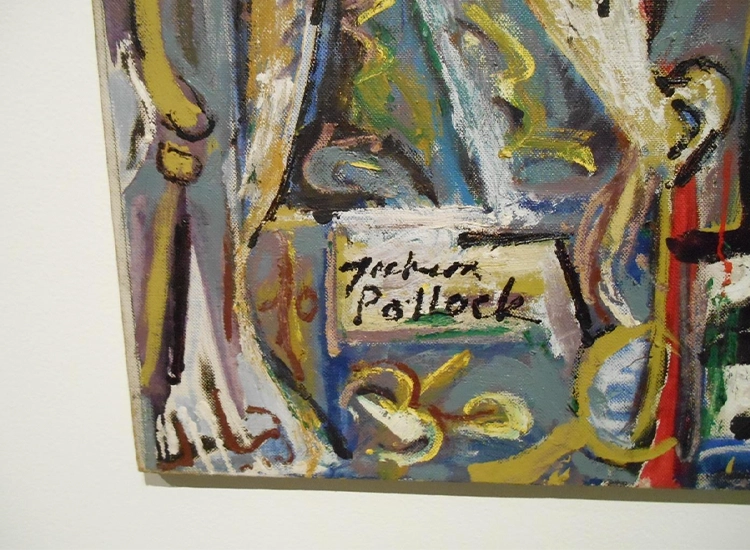
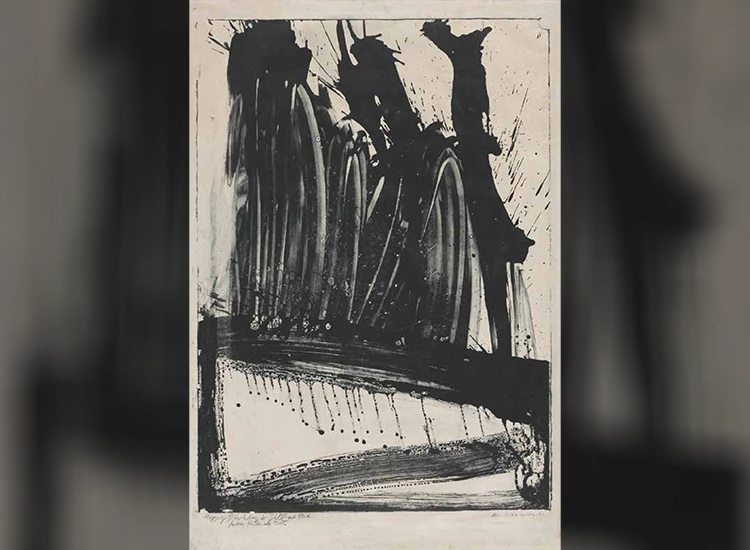
Photo: Ned Hartley / Wikimedia Commons
The Art That Looked Like Freedom
Abstract Expressionism fit the cultural logic of the campaign remarkably well. The movement had started in New York during the 1940s and soon gained attention for its large scale, gestural brushwork, improvisation, and intensely personal approach to painting. Pollock’s work in particular suggested a kind of freedom that seemed almost impossible to control. His paintings offered no clear instruction about how they should be understood. Sometimes, they left viewers wondering what they were even looking at. That ambiguity was part of the point.
Soviet Socialist Realism was expected to communicate clear political and social ideals. American modernism offered something very different. Artists could work without an official subject or a prescribed style, and viewers could decide what the work meant for themselves.
This was also why the CIA could not simply turn Abstract Expressionism into government art. The more obviously political the movement became, the less convincing its claim to artistic freedom would have been.
The paradox was useful. The American government could promote avant-garde art abroad and keep its own involvement hidden.
The New American Painting
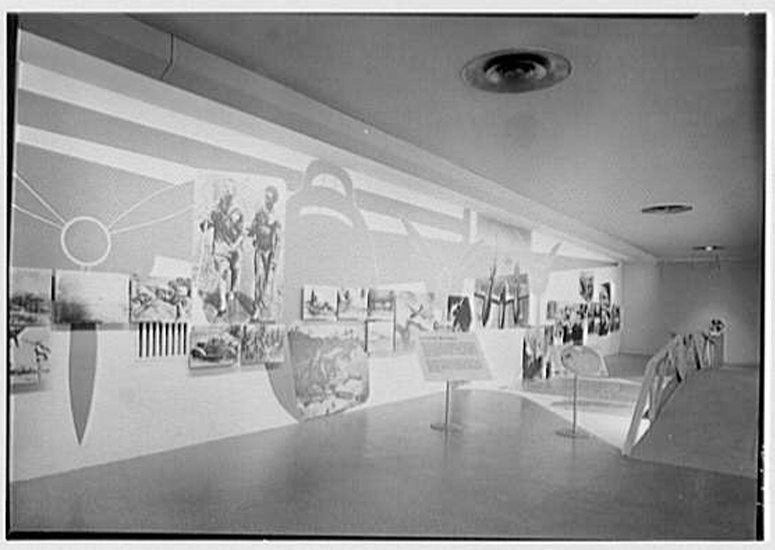
One of the clearest examples was The New American Painting as Shown in Eight European Countries, 1958–1959, organized by the Museum of Modern Art’s International Program.
The exhibition brought together 17 American artists and toured eight European countries. It presented American painting as a major force in modern art and reinforced New York’s growing status as a rival to Paris.
The political implications were harder to miss.
The exhibition presented American art as a product of an open society. Paintings could be difficult, aggressive, eccentric, or completely abstract. Their very existence could be used to suggest that American culture allowed individual expression on a scale that a totalitarian state could not.
The exhibition was organized by MoMA. But covert CIA money entered parts of the wider cultural infrastructure surrounding such projects. In the case of The New American Painting, the clearest documented CIA connection came when the exhibition was transferred to London. Funding for that move came through the Farfield Foundation, a covert channel for CIA money.
The Artists Did Not Sign Up for the Campaign
The strangest part of the story may be that the artists themselves were not recruited as conventional government propagandists.
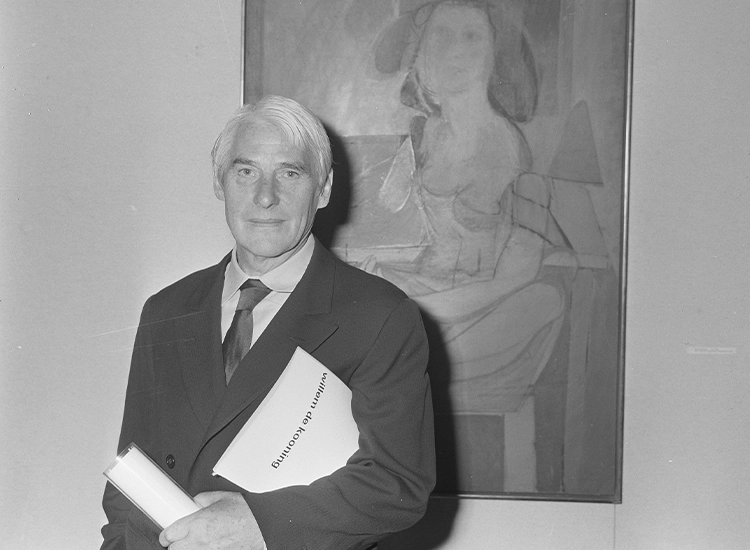
There is no evidence that Pollock, Rothko, de Kooning, or Motherwell knew about the CIA’s role in the cultural network promoting American art abroad. Many of the artists involved had complicated relationships with American politics and with the establishment itself. Some had backgrounds on the political left, and the idea of becoming government representatives would have been deeply at odds with their public identities.
That distance made their work especially useful. Pollock’s paintings never needed an American flag to serve a political purpose. Their value lay in what they suggested about a culture where artists could create something radically individual.
Art historian Eva Cockcroft made this argument in her 1974 Artforum essay, Abstract Expressionism, Weapon of the Cold War, which examined the relationship between American cultural institutions and U.S. foreign policy in the international promotion of Abstract Expressionism.
MoMA and the Politics of Cultural Power
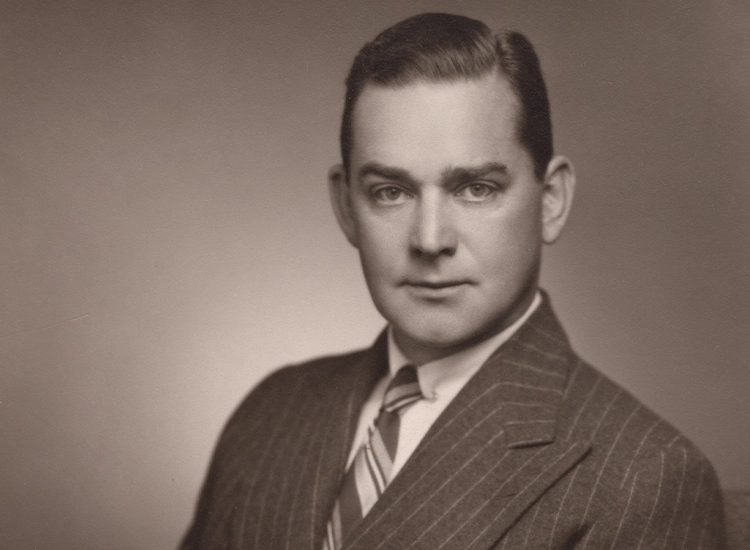
The story also points to the unusual role played by institutions such as MoMA. The museum had already explored the political and diplomatic power of modern art before the Cold War took shape. In 1941, MoMA president John Hay Whitney described the museum as a “weapon of national defense” and argued that art could serve the interests of a free society.
That statement predates the CIA’s Cold War campaign and should not be treated as evidence that Whitney was describing a CIA operation. But it reveals that the idea of culture as part of national power was already present in American institutions.
By the 1950s, MoMA was one of the most influential American institutions promoting modern art internationally. Its exhibitions and international programs strengthened New York’s position as a major center of the postwar art world.

Photo: Rhododendrites / Wikimedia Commons
So, What Made Abstract Expressionism Useful to the CIA?
The CIA saw political value in the movement’s independence. Pollock did not paint Number 1A, 1948 for the CIA. Rothko was not a government artist. Abstract Expressionism had its own history and its own ambitions long before the agency entered the picture.
American Abstract Expressionism offered a powerful image of artistic freedom. During the Cold War, that image traveled well. The U.S. government still uses art in its foreign policy today through programs such as Art in Embassies, where exhibitions and artist exchanges serve as tools of cultural diplomacy.
The question extends beyond the CIA and the Cold War.
When governments use art to shape how a country is seen, where does cultural diplomacy end and propaganda begin?
And if the art remains genuinely free, does its political use change what it means?
Short Answers (FAQ)
Did the CIA use modern art as a Cold War weapon?
The CIA covertly supported organizations and cultural networks that promoted American modern art, especially Abstract Expressionism, abroad. The goal was to present American artistic freedom as a contrast to Soviet Socialist Realism and strengthen the U.S. position in the cultural Cold War.
Did Jackson Pollock know about the CIA’s involvement?
There is no evidence that Pollock or other major Abstract Expressionist artists knew about the CIA’s role in the cultural networks promoting their work internationally.
Why did the CIA promote Abstract Expressionism?
Abstract Expressionism offered an unusually strong image of artistic independence. Its apparent freedom from official political instruction made it useful in the ideological competition with the Soviet Union.