Home
Home Articles
 Twos Talks
 Videos
London’s Underground as a Public Art Gallery
Inside the London Transport Museum’s Global Poster Gallery and the graphic design legacy behind the Underground.

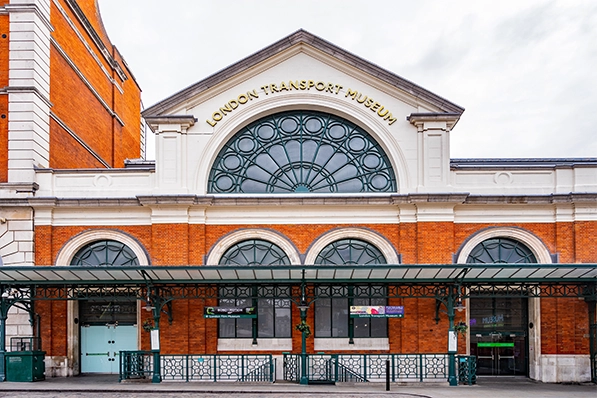
The Global Poster Gallery preserves more than a century of posters created for the London Underground and London Transport. It sits inside the London Transport Museum and offers a clear view of how design shaped public communication, guided daily movement through the city, and built one of the most recognizable visual identities in the world. The collection began as a practical tool for service messages and grew into a landmark archive that continues to influence designers today.
Poster Power
Before digital displays and urban advertising, posters served as the primary method of public communication in London. The Underground commissioned artists to create work that promoted services, highlighted travel to new destinations, and supported public morale during periods of uncertainty. These posters delivered information with clarity and introduced new visual ideas into everyday life.
The vivid colors, distinct typographic choices, and inventive compositions helped create the identity of London’s transport system. The Underground became more than a network of routes. It became a visual brand that spoke directly to millions of people. These early posters laid the foundation for a century of visual communication preserved in the Global Poster Gallery.
A Century of Graphic Design
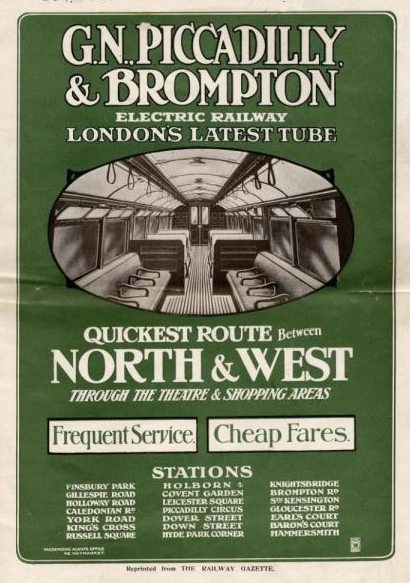
The Global Poster Gallery holds more than 1,000 original artworks and 30,000 posters. This archive traces the evolution of graphic design throughout the twentieth century. It shows early modernist influences, the rise of minimal approaches in the mid-century period, and the spread of new technologies that changed how ideas could be reproduced.
The posters also document shifts in public life. They reveal how London grew, how people moved through the city, and how design adapted to new expectations. The collection functions as a historical timeline connecting design decisions with cultural and social change.
Techniques Across Eras
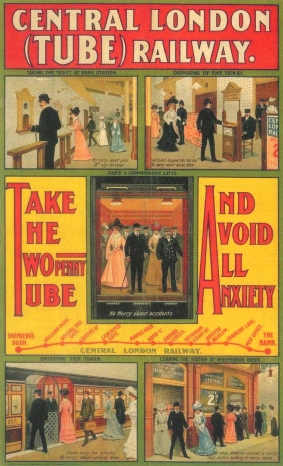
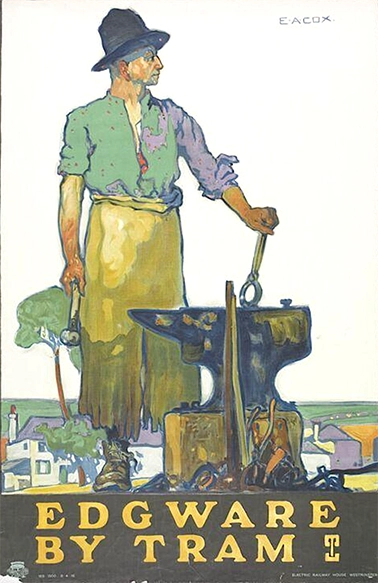
The gallery presents a wide range of techniques. Early posters relied on painting and hand-drawn illustration. Later works incorporated collage, geometric abstraction, photographic elements, and advances in printing.
Each era contributed distinctive styles. Artists adapted to available tools and found new ways to make public communication clear and visually engaging. The technical changes in the collection reflect the broader evolution of the design profession. The gallery’s technical diversity set the stage for the most notable posters, which exemplify the creativity and clarity London Transport demanded.
Notable Posters
These London Transport posters showcase the work of some of the most influential designers in the network’s history.
John Hassall: No Need to Ask a Policeman (1908)
Hassall introduced a clear and friendly style that helped passengers understand the system with ease. This poster remains one of the early examples of successful public messaging within the network.
Dora M. Batty: There is Still the Country (1926)
Batty invited Londoners to explore rural destinations by train. Her posters combined pastoral illustration with confident composition and created a sense of escape from city life.
Edward McKnight Kauffer: Power, the Nerve Centre of London’s Underground (1931)
Kauffer used bold shapes and modernist structure to express the energy of the Underground. His work strengthened the idea of the network as a symbol of efficiency and progress.
Abram Games: London Transport at London’s Service (1947)
Games used precision and visual economy to communicate ideas clearly. His post-war posters remain influential and show how minimal elements can produce strong messages.
Hans Unger and Eberhard Schultze: Busabout (1970)
Unger and Schultze introduced a colorful and playful approach that reflected the cultural tone of the 1970s. Their abstract forms drew attention to new bus routes and celebrated movement within the city.