Home
Home Articles
 Twos Talks
 Videos
The Communist Propaganda Posters That Built Modern China
A concise guide to the communist propaganda posters that drove the Chinese Cultural Revolution’s visual and political message.
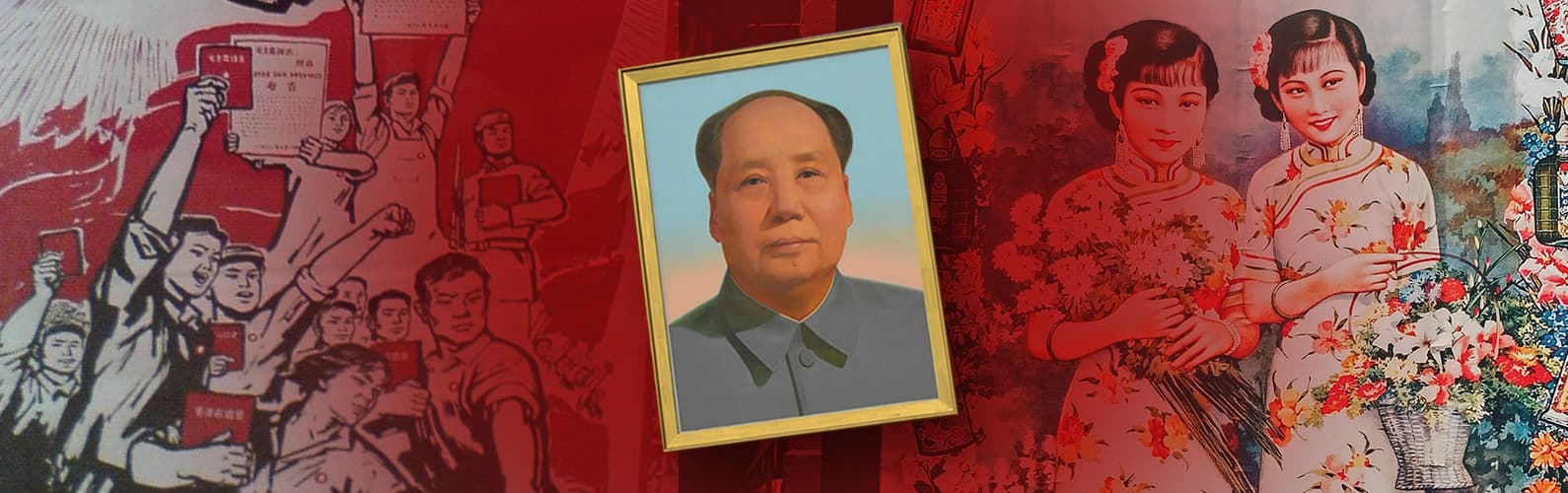
When Mao Zedong launched the Cultural Revolution in May 1966, China entered one of its most visually controlled periods. Propaganda posters became the state’s most effective tool for directing public behavior, promoting ideology, and building a new national identity through imagery.
Posters as the Country’s Primary Visual Language
In the 1960s, low literacy meant visuals carried the party’s messages faster than text. Posters filled streets, factories, schools, and villages, guiding citizens with clarity and immediacy.
Designers followed strict directives; every color, figure, and composition had a purpose. Posters instructed viewers on loyalty, productivity, and social roles, creating a system of visual codes readable at a glance by millions. The repetition of gestures, poses, and symbols established a consistent vocabulary that citizens could interpret without words.
A Soviet Influence on Poster Design
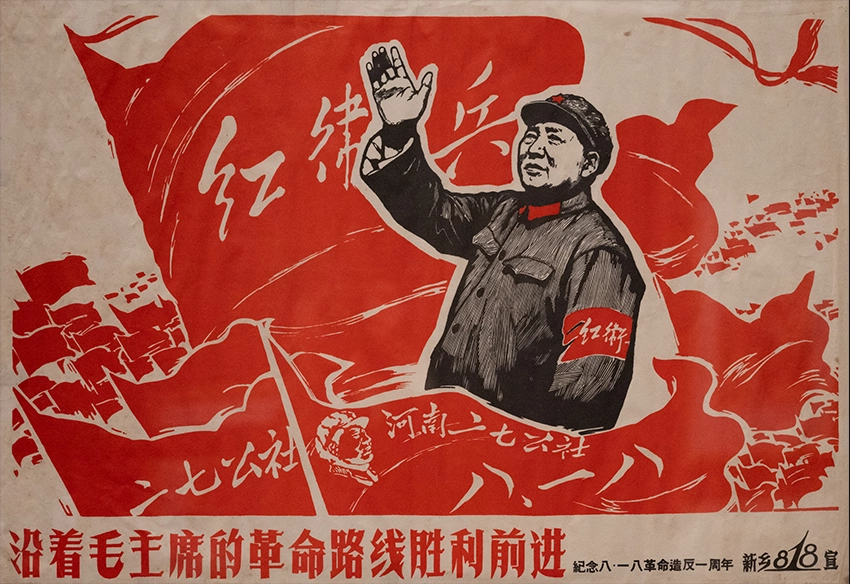
The posters followed the style of Soviet propaganda, featuring bold painterly techniques, dramatic compositions, and dominant red tones. Red was not only visually striking but symbolized revolution, vitality, and Party authority.
Chairman Mao almost always appeared at the center. He stood among soldiers, farmers, and workers, or loomed above the scene as a guiding, almost divine presence. Scale, posture, and gaze directed the viewer’s attention and reinforced social hierarchy.
Small design details carried meaning. The placement of machinery, the angle of a raised fist, or the expression of a worker’s face instructed citizens on how to demonstrate loyalty, strength, and productivity in everyday life. Designers had to balance visual impact with strict ideological constraints, leaving little room for personal style.
Core Themes in Cultural Revolution Posters
Across all posters, several motifs appeared repeatedly:
Industrial and agricultural work: Citizens operating machinery or tending fields, often smiling and energetic, presenting labor as patriotic and aspirational.
Mao’s presence: Soldiers, workers, and peasants held his writings, signaling loyalty and the importance of his ideas.
Women at work: Early posters showed women in agriculture; later ones placed them in factories, working alongside men and taking on active roles.
Military figures: Soldiers appeared prominently, representing discipline, protection, and commitment to the state.
Design choices reinforced these messages. Color, posture, and scale directed attention and communicated hierarchy, guiding citizens on how to act according to Party expectations.
A Poster That Crossed the Party Line
Not every poster passed the state’s scrutiny. A poster titled Long Live Chairman Mao drew condemnation. It excluded Mao’s image and omitted key ideological symbols. It featured a wealthy-looking woman in bourgeois clothing, a depiction the government saw as inconsistent with socialist ideals. The consequences were severe: the artist was beaten and publicly humiliated, which reminded that design under authoritarian power is never neutral.