Home
 Articles
 Twos Talks
 Videos
Would You Trust This Photo?
AI can make invented scenes look like documentary photographs. Genuine images can also tell a misleading story when their framing or captions leave out key context.
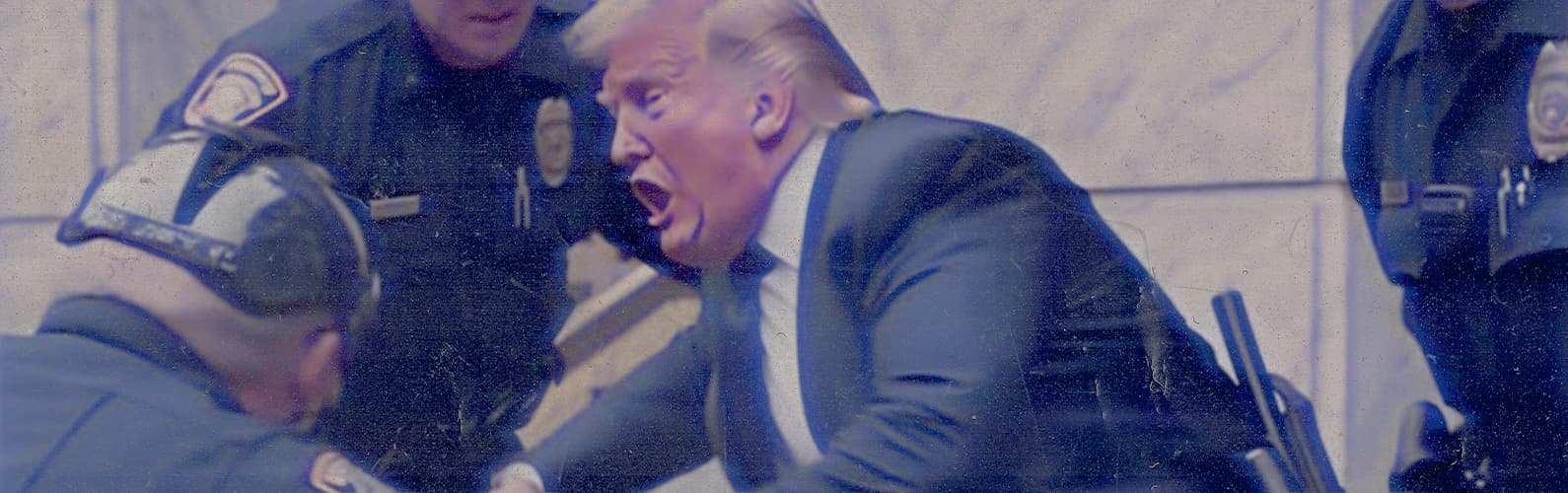
A photograph can look like proof before anyone checks what it shows. A quick, unpolished shot can feel like a direct record of a moment as it happened. Decades of news photography have taught us to associate this look with real events. But appearance alone tells us little about who made the image or how.
The Grammar of News Photography
Photojournalists work from a particular place and time. Where they stand and when they press the shutter determine what viewers see.
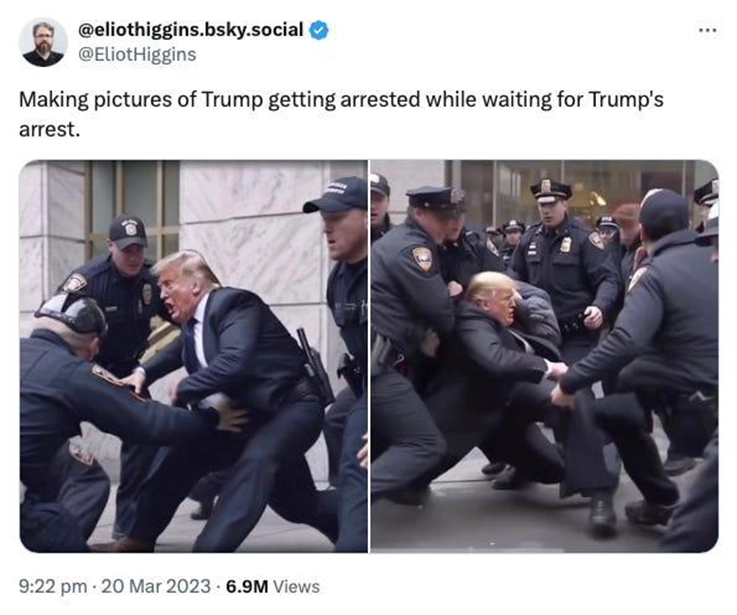
In March 2023, Eliot Higgins used Midjourney to imagine what Donald Trump's arrest might look like. He posted the images on Twitter with the caption, “Making pictures of Trump getting arrested while waiting for Trump's arrest.”
A study published in Digital Journalism in July 2026 compared 212 photographs from the World Press Photo Awards (2020–2024) with 816 AI-generated images created in Midjourney using the same captions. The analysis focused on war imagery. Researchers found that the AI-generated images tended toward standardized compositions and familiar visual symbols. The photojournalistic photographs displayed greater variety in framing and visual approach, with compositions that drew attention to the human consequences of war.
The comparison suggests that AI-generated images can reproduce the look of news photography without documenting the events they appear to show.
The Frame Is an Editorial Decision
Even an authentic photograph requires interpretation. Cropping determines which details remain visible, and a caption guides readers toward a particular understanding of the scene.
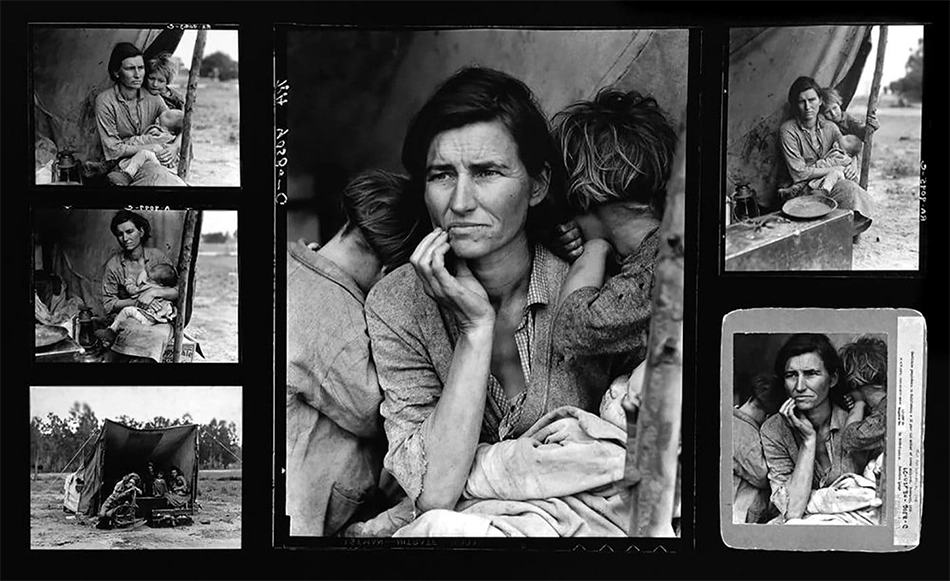
Dorothea Lange's photographs of Florence Owens Thompson offer a well-known example. Lange later recalled making five exposures, moving closer to Thompson from the same direction.
Two photographs from a protest during Prague's 1989 Velvet Revolution offer another example. One shows a wide view of the crowd. The other is a closer view from behind, focused on the back of one protester's head and a raised V sign, with a few others visible in the background.
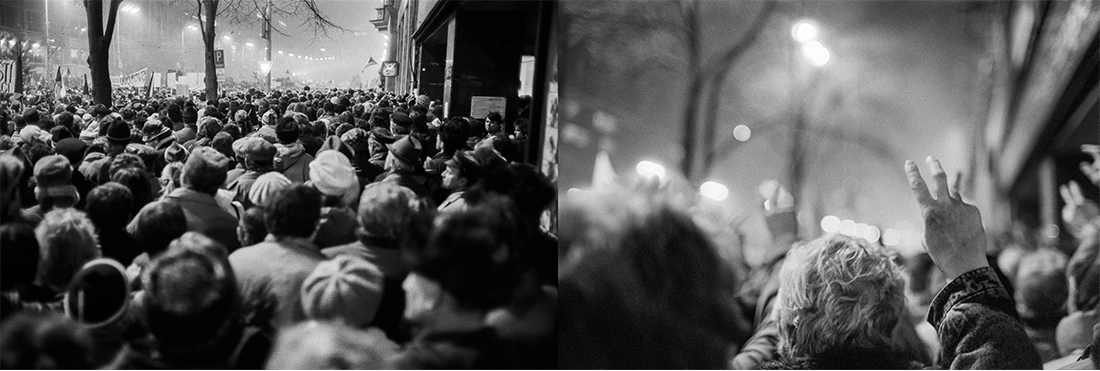
Framing choices continue after the shutter is released. A crop chosen for publication can remove context, and a caption can guide viewers toward a particular reading. In political coverage, selective framing can reinforce a preferred account of an event, even when the photograph itself is genuine.
The Limits of Image Labels
The European Union's AI Act sets out new transparency rules for AI-generated content. The obligations under Article 50 began applying on August 2, 2026. Providers of AI systems that generate synthetic images, audio, video or text must ensure that covered outputs carry machine-readable marks identifying them as artificially generated or manipulated. Providers of systems placed on the market before that date have until December 2, 2026, to meet this marking requirement.
The Act also requires deployers to disclose image, audio or video content that qualifies as a deepfake. For content that forms part of an evidently artistic, creative, satirical or fictional work, disclosure is limited to identifying the presence of AI-generated or manipulated material in an appropriate way that does not interfere with the work's presentation or enjoyment.
Adobe's Content Credentials offer one example of how an image's origin can be recorded. Firefly automatically attaches them to assets whose pixels are entirely generated with its tools, including images made with Text to Image. The credentials can identify the issuing organization, the date and the AI tool used. Adobe's Inspect tool allows viewers to examine this information when the credentials are available.
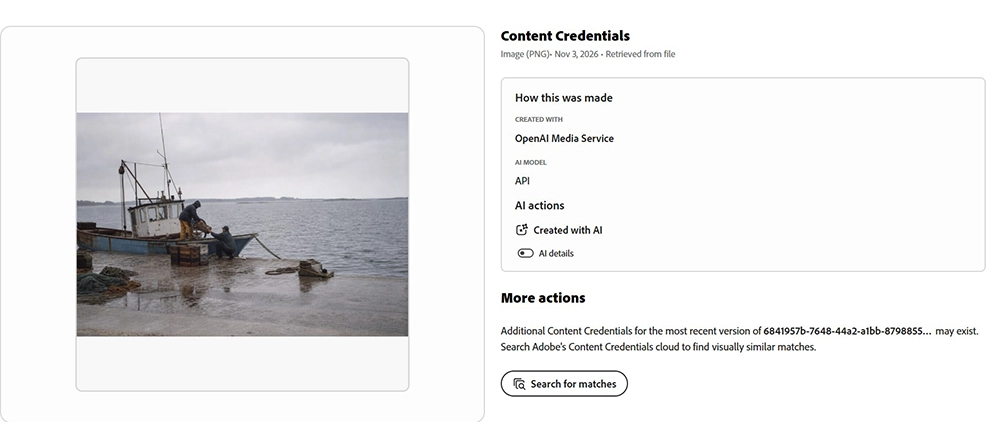
Such records can tell viewers how an image was made. They cannot confirm whether a caption is accurate or whether the frame leaves out details needed to understand an event. An authentic photograph can still mislead through false attribution or selective presentation.
Documentary photography has taught audiences to read certain visual cues as signs of authenticity. Generative AI can reproduce those cues. Designers and editors also guide how audiences read an image through their framing and captions.
Short Answers (FAQ)
How can you tell if a photo is AI-generated?
No visual test is conclusive. Look for inconsistencies in details such as lighting, anatomy and reflections. Check the original source, available provenance information and independent evidence before deciding whether an image is authentic.
Can a real photograph be misleading?
Yes. Cropping can remove important information, and a misleading caption can change how viewers interpret an authentic image. Always consider the context in which the photograph was taken and published.